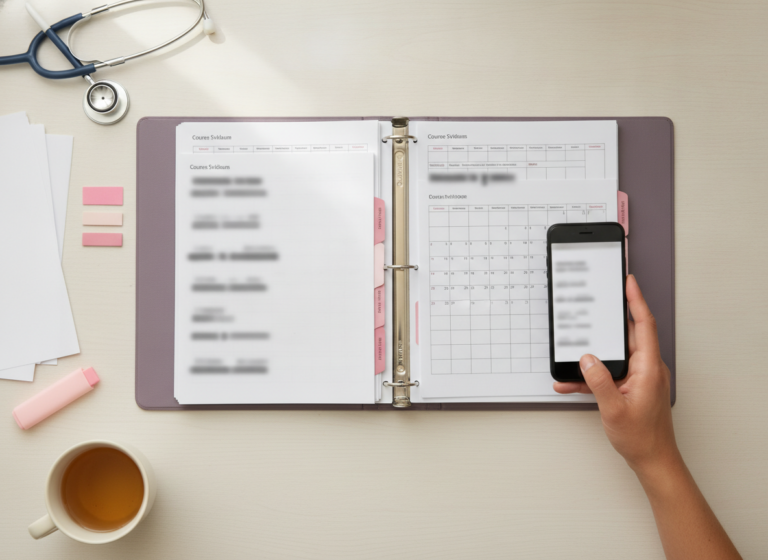
18 Nursing Clinical Tips for Beginners to Walk In Confident

Your first shift on the unit is close, and your stomach knows it. You have the scrubs, the syllabus and a long list of “what if” thoughts. These nursing school clinical tips for beginners are here to help you walk in with a plan.
Most beginners do not struggle with skills on day one. They struggle with the small stuff: where to stand, who to ask, what to write down, and what to do with shaky hands.
I picked these 18 tips by looking at the questions nursing students ask most often. Each one is small, free or cheap, and something you can do this week. I’ll cover the night before, what to bring, how to talk with staff, and how to reset afterward. A few mention gear, and some of those links may earn me a small commission at no extra cost to you.
If you only have time for three, start with laying out your uniform the night before, using a one-page brain sheet, and taking slow breaths when nerves hit. Screenshot the box below, then read on.

1. Lay out your uniform the night before

Clinical mornings start early, and morning brain is slow. Before bed, put everything where you can see it: scrubs, school ID badge, a watch with a second hand, and your shoes.
Reread your school’s dress code while you are at it. Most programs have rules on nails, jewelry, hair and visible tattoos. I have seen students get sent home over a ring or long nails, and it is a rough way to start. Smooth or iron your scrubs, then set **two alarms**.
2. Review your patient’s meds and diagnosis

If your school gives you the patient assignment ahead of time, use it. For each medication, look up what it is for, one or two common side effects, and what to check before it is given, like a heart rate or blood pressure. Then read up on the main diagnosis so the chart makes sense.
You do not need to know everything. Aim for **three or four** things you can explain in plain words. A tidy page of notes helps here, and my guide on how to take nursing school notes shows one way to set it up.
3. Pack a small clinical bag

Beginners tend to overpack. A huge bag gets heavy fast, and there is rarely anywhere to put it on the unit. Pick something small that fits in a locker or cubby, and keep only what you will use in your pockets. Here is what I would pack for a first day:
- Two black pens and a small notebook
- A few extra copies of your brain sheet
- A water bottle and a snack that will not melt
- Hand cream, since all that washing dries out your skin
I turned this list into a clinical day checklist printable. You can get it free when you join my email list.
4. Choose comfortable, supportive nursing shoes
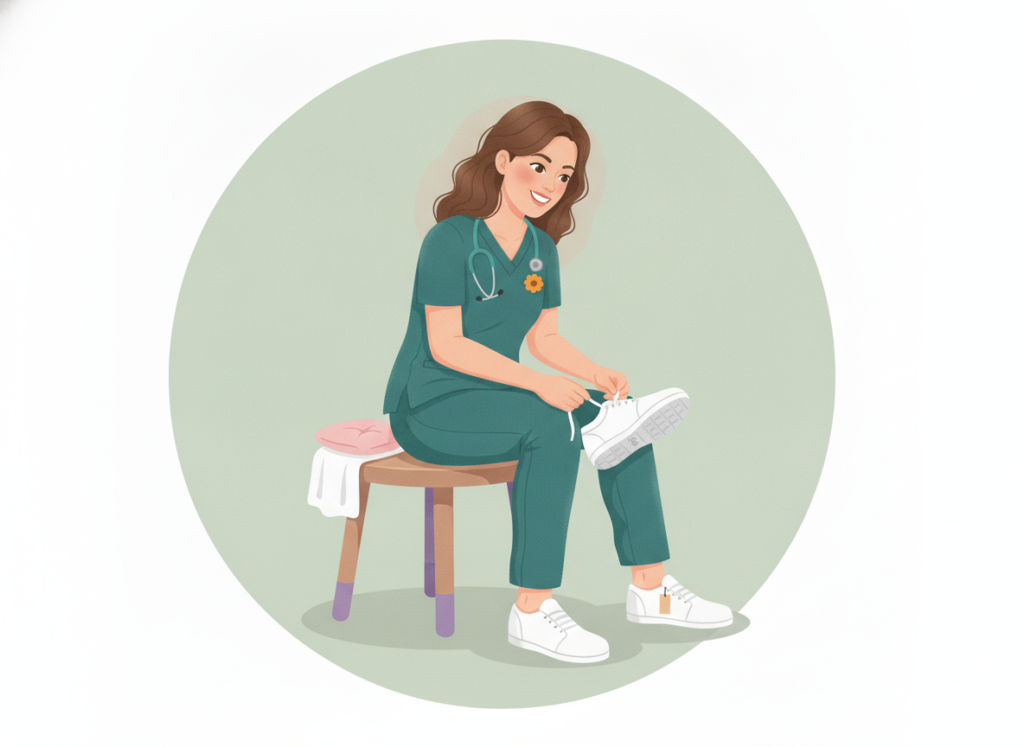
You may be on your feet for **8 to 12 hours**, so shoes matter more than you think. Look for closed toes, a non-slip sole and a surface that wipes clean. Many schools ask for mostly white or black shoes, so check your dress code before you buy.
Break them in before clinical day. Wear them around the house and on a few errands. A new pair that rubs your heel on day one is hard to ignore when you are trying to focus on a patient.
5. Bring a reliable stethoscope and penlight

You will use both on almost every patient. A stethoscope lets you hear heart, lung and bowel sounds. A penlight helps you check pupils and look at a throat.
Check your program’s supply list first. A basic stethoscope that fits well is fine for a beginner, and you can upgrade later if you want to. Write your name on both with a marker or a small label. Shared units mean tools wander, and mine have too.
6. Arrive fifteen minutes early

Being **15 minutes** early gives you room for the things that go wrong. Parking can take longer than planned. The unit can be hard to find. You may need the restroom before the shift starts.
It also shows your instructor and the nurses that you take this seriously. If you can, drive or walk the route ahead of your first day. Arriving calm beats arriving out of breath, and you will listen better in that first huddle.
7. Introduce yourself to your nurse

Say hello in the **first 10 minutes** of the shift, before the morning rush pulls your nurse away. Give your name, your school and the patient you are following.
Then ask, “How do you like to be updated during the day?” It shows you want to work their way. I have seen students wait until late morning to speak up. By then the nurse had already planned the day without them. An early hello gives you a better shot at joining skills, assessments and med passes.
8. Ask your instructor about expectations

Guessing what your instructor wants is where a lot of first-day stress starts. Every school and every unit has its own rules, and you do not want to learn them the hard way.
Ask at orientation, or in the first few minutes of day one. Bring these four questions:
- What time should I arrive, and where do we meet?
- Which skills can I do with my nurse, and which need you in the room?
- When and how do I report off for breaks?
- What paperwork is due, and by when?
9. Learn names of unit staff

Start with **five names**: your nurse, the charge nurse, the nursing assistant, the unit clerk and your instructor. That is plenty for day one.
Write each name in your notebook with a few clue words, like “charge, red hair, desk by room 12.” Then say the names out loud. “Thanks, Maria” lands better than a nod. People remember the student who remembered them.
10. Use a one-page brain sheet

One page per patient keeps everything in one place, so you are not flipping through notes mid-shift. Make a sheet for each patient and fold it to fit in your pocket.
Follow your school’s privacy rules. Most programs want initials and room number only, never full names. At the end of the day, shred the sheets or hand them in, as your program directs. A good layout has:
- Age, diagnosis, allergies and code status at the top
- A box for vitals, with room to write **2 or 3** sets
- A medication list with the time each one is due
- A time-slot column for tasks, like “0900 assessment”
11. Carry a pocket organizer for notes

Pens vanish on the ward. A small pocket organizer holds a notepad, **two or three pens**, a penlight and your brain sheets in one spot, so you are not patting down your scrubs while someone waits on an answer.
Pick one that fits your pocket without sagging, and try it on before day one. Some product links on Ward Wisdom are affiliate links, so I may earn a small commission if you buy through them, at no extra cost to you. A plain pocket notebook works fine too.
12. Ask questions before doing new skills

“I have not done this before” is a safety statement, not a confession. Say it before you gather supplies, not while you stand at the bedside holding them.
Ask your instructor or nurse to watch you the first time. Or ask to see it done once, then talk through the steps out loud. Many students skip this because they fear looking behind. A quick check beats a mistake with a real patient every time.
13. Write Down Questions for Later

Your brain holds almost nothing on a busy floor. A small pocket notebook fixes that. When a question pops up and your nurse is mid-task, write 2 to 4 words and keep moving. “Why hold the med?” is enough.
I have watched many students plan to remember, then forget by lunch. Ask your list at a calm moment, like a break or post-conference. Bring a pen that clicks so you are not hunting for a cap. A notebook that fits a scrub pocket costs a few dollars.
14. Wash Hands and Check Patient ID

Two habits show up in almost every patient visit, and both protect people. Clean hands come first, every time you enter and leave a room. Then confirm who you are caring for.
Use soap and water for at least 20 seconds when your hands look dirty. Alcohol rub is fine when they do not. Your school and the unit may have their own rules, so follow those first.
- Clean your hands at the door, before touching anything.
- Use 2 identifiers, such as name and date of birth.
- Compare the wristband to the chart, not to your memory. Ask the patient to say their name.
15. Take Slow Breaths When Nervous

Shaky hands and a racing heart are normal on day one. They do not mean you picked the wrong job.
Try this before you enter a room. Breathe in through your nose for 4 counts, then out through your mouth for 6 counts. Repeat 3 times. The longer breath out tells your body to settle, and nobody notices, so a hallway or supply room works fine. If you feel dizzy or hot, tell your instructor and sit down. That is safer than pushing through.
16. Report Mistakes Right Away, Honestly

Almost every nursing student makes a slip. What matters is what you do in the next minute.
Find your instructor or the nurse right away and say what happened in plain facts. “I think I left the bed rail down” works well. Do not wait, hope, or fix it quietly. Patient safety comes first, and a quick report lets someone check the patient and solve the problem. Honest students earn trust fast. Hidden mistakes are what get students into real trouble. Afterward, ask what you can do differently next time.
17. Offer Help With Basic Patient Care

Slow patch of the shift? Do not stand at the desk looking lost. Ask the nurse or aide, “I have time. What can I help with?”
Good starter tasks include filling water pitchers, helping with meals, repositioning a patient, answering call lights and helping with a bath. Each one builds skill and trust. Check first, though. Stay inside what your school allows you to do, and ask if you are unsure. Staff remember students who offer, and they often invite you into better learning moments.
18. Reflect on Your Day After Clinical

Spend 5 minutes on this while the day is fresh, ideally the same evening. Use the back of your brain sheet or a notes app. Keep patient names and details out of it, since privacy rules still apply.
Reflection turns a tiring shift into a plan for next week. Answer these three, then stop:
- One thing that went well.
- One thing I want to do better.
- One question to look up or ask next time.
My free Clinical Day Checklist printable includes a first-day-on-the-unit list and a one-page brain sheet, if you want a ready-made place to do this.
Free printable · instant PDF
Clinical Day Checklist and One-Page Brain Sheet
- ✓ Clinical Day Checklist
- ✓ One-Page Brain Sheet
Opens a print-ready page — choose "Save as PDF" to keep it.
Frequently Asked Questions
What do I say if I freeze when my nurse asks me to do something?
Say, 'Let me check the steps and I'll be right back to you.' Then look at your skills sheet or ask your nurse to walk you through it again. Asking before you act is part of the job, and nurses expect it from students.
Do I need to bring my own stethoscope to clinicals?
Many programs expect you to have your own, but rules vary by school and unit. Check your program's supply list before your first day. A stethoscope you trust will save you stress when you are listening to heart and lung sounds.
How much should I tell patients about who I am?
Introduce yourself by your first name and your role, such as 'I'm Sam, a nursing student working with Nurse Lee today.' Patients usually want to know who is in their room. If they ask a question you can't answer, say you'll find out from your nurse.
What if I make a mistake on my first clinical day?
Tell your nurse or instructor right away, even if the mistake seems small. Stick to the facts of what happened and what you did next. Fast, honest reporting helps protect the patient, and most staff respect a student who speaks up.
How early should I get to my clinical site?
Aim to arrive about fifteen minutes before your shift starts. Some sites need extra time for badge pickup, parking or a locker, so check your program's instructions too. Arriving early gives you time to find the break room and say hello before report.
Pick Two Tips and Start There

Eighteen tips is a lot to hold in your head. You do not need all of them on day one.
Short on time tonight? Lay out your uniform and read your patient’s meds and diagnosis. Watching your budget? Start with the free habits: arrive 15 minutes early, introduce yourself and ask before new skills. Gear can wait until you know what you actually use. Feeling nervous? Practice slow breaths and decide now that you will report a mistake right away.
If clinical is landing on top of exam weeks, my guide on how to study for nursing school step by step without burning out can help you plan the rest of your week. Try two or three of these nursing school clinical tips for beginners, then add more as you settle in. Save this pin to your nursing school board so it is ready the night before your first shift.

Written by
Hannah Brooks
Founder & Nurse Resource Curator
I started this blog because nurses and nursing students deserve resources that are practical, honest and kind to their time. Too much advice online is vague, recycled or written by people who have never pulled an all-nighter before an exam or limped out of a 12-hour shift. Here you will find study plans, NCLEX prep strategies, brain sheet templates, new grad survival tips, shift meal ideas, gear reviews and real conversations about burnout, money and career change. Every guide is researched carefully, and I tell you when something is my…