
What to Eat on Night Shift to Stay Awake Without Feeling Sick

You walk into your shift hungry, grab whatever the vending machine has, and by 3 a.m. you feel foggy and a little sick. I know how that goes. Figuring out what to eat on night shift is hard when your body clock is upside down.
This guide gives you a plan, not a perfect diet. You will map your eating times, pack a snack box, and set up meals that keep your energy steady without upsetting your stomach.
Here is why it works. Small, balanced meals with protein and fiber digest slowly. That helps you avoid the spike and crash that heavy or sugary food can bring.
Be honest with yourself about time. The first round takes about 1 hour 30 minutes, and about 45 minutes of that is hands-on. You do not need to be a good cook. If you are brand new to nursing, my new grad nurse tips cover more first-year survival habits.
This is general food guidance, not medical advice. If you have a health condition, diabetes, or take medication, check with your doctor first.
- Pen and paper, or a phone notes app
- Your shift schedule for the week
- Protein: eggs, chicken, Greek yogurt, cheese sticks
- Slow carbs: oats, brown rice, whole-grain bread
- Fruit and veggies: apples, berries, carrots
- Nuts or seeds (unsalted is easiest on the stomach)
- Water bottle, 16 ounces or larger
- Small containers or zip bags
- Insulated lunch bag with an ice pack (or any bag plus a frozen water bottle)
- Thermos for soup or a warm drink
- Map your shift hours and meal windows
- Eat a real meal before your shift starts
- Pack a shift snack box for overnight hours
- Space your eating across the night
- Swap out the foods that cause overnight trouble
- Eat a light meal after your shift
- Prep three night shift meals in one session
- Book a check-in if your stomach or energy stays off
Map Your Shift Hours and Meal Windows

Open a notes app on your phone and write down four times:
- When you wake up
- When your shift starts and ends
- When your break usually happens
- When you plan to sleep
Now add an eating time every 3 to 4 hours. This stops you from getting so hungry that you grab the first sugary thing you see. For a 7 p.m. to 7 a.m. shift, a night shift eating schedule could be a meal at 5:30 p.m., a snack at 10 p.m., a small meal at 1 a.m., a light snack at 4 a.m., and a light meal at 7:30 a.m.
Want a ready-made grid? My night shift meal planner printable has one.
Eat a Real Meal Before Your Shift Starts

Sit down for a full meal 1 to 2 hours before you clock in. Build the plate with a protein, a slow carb, and a vegetable or fruit.
Night shift meal ideas that work here: chicken with brown rice and broccoli, scrambled eggs with whole-grain toast and berries, or turkey chili with a side salad. The mistake I hear about most is skipping this meal, then eating a giant one at 2 a.m.
Pack a Shift Snack Box for Overnight Hours

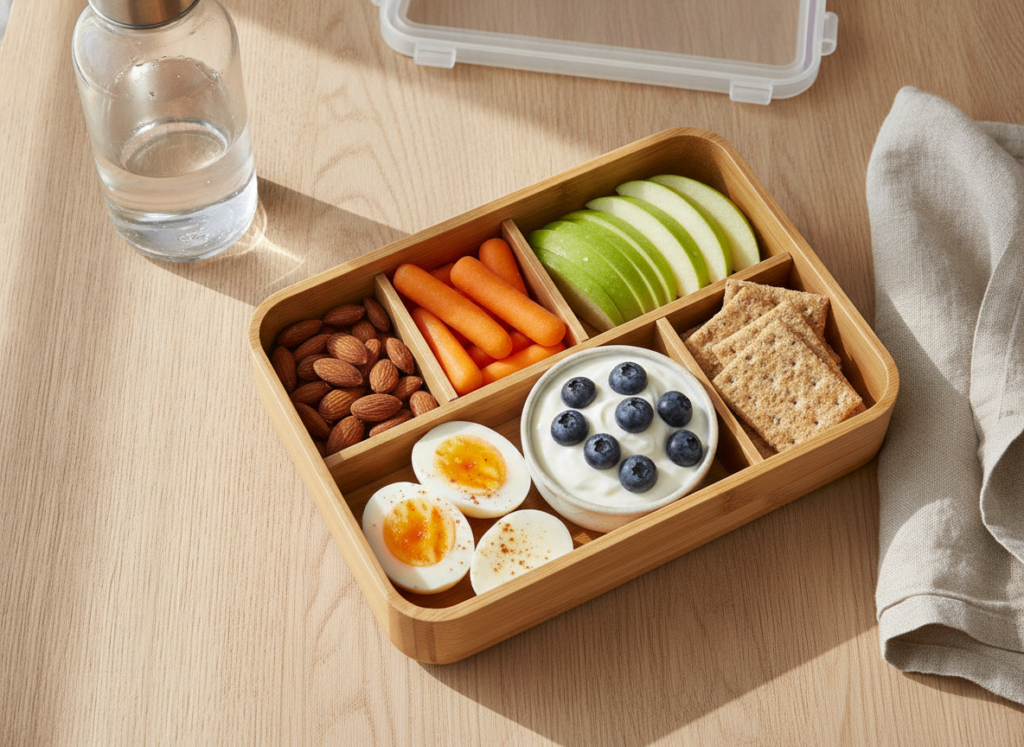
Pack 3 small portions, one for each stretch of the night. Pair a protein with a fiber food, because that combo keeps you full longer. The best foods to stay awake on night shift are plain and steady, not flashy.
- A hard-boiled egg and an apple
- 1 ounce of nuts (a small handful) and a cheese stick
- Hummus with carrot sticks
- Plain Greek yogurt with berries
- Whole-grain crackers with peanut butter
Use small containers or zip bags, and add an ice pack for the yogurt and eggs. No lunch bag yet? Any bag with a frozen water bottle works, and you get cold water later. If you want gear ideas, I listed some in practical gifts for nurses to use at work.
Space Your Eating Across the Night

If your break lands around 1 or 2 a.m., treat it as a small meal, not a feast. Make it about half the size of the plate you ate before shift. Heavy food sits badly when your body expects to be asleep.
Then follow the night shift eating schedule you wrote in step 1. Reach for a light snack near 4 a.m., when energy dips hardest, and skip it if you still feel full.
Take a few sips of water every hour too. Mild thirst can feel a lot like tiredness, and it is easy to forget to drink on a busy unit.
Swap Out the Foods That Cause Overnight Trouble
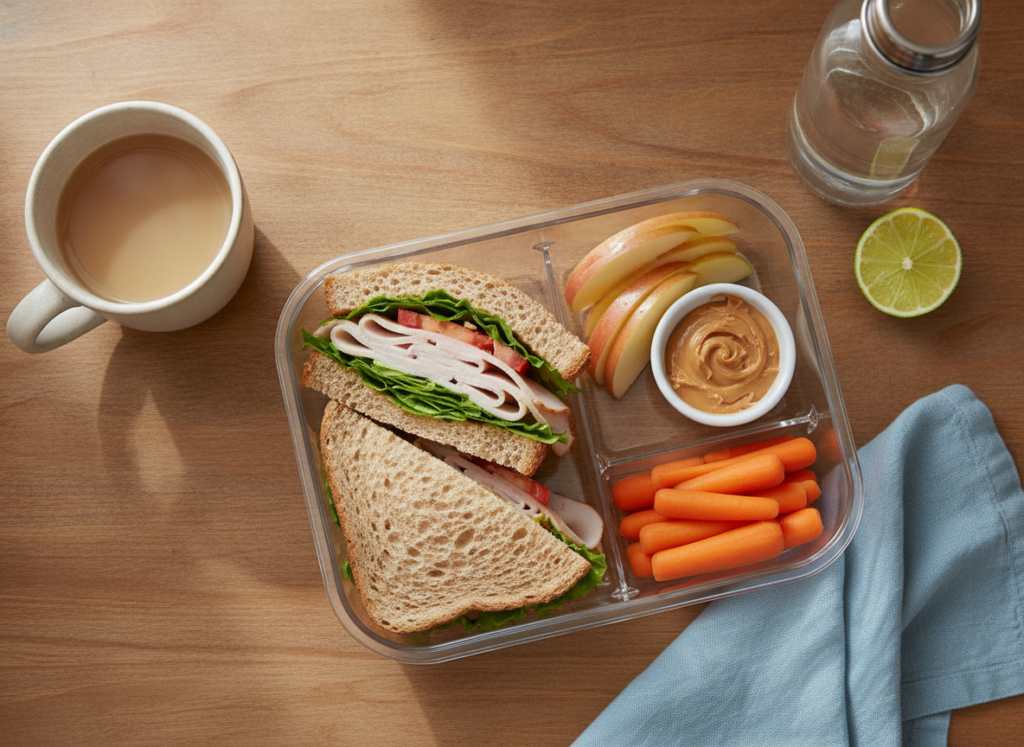
Most night shift stomach trouble comes from the same short list of foods. Here are the usual suspects and an easier swap for each.
| Often causes trouble | Try this instead |
|---|---|
| Candy, pastries, vending machine snacks | Apple with peanut butter |
| Fried fast food | Turkey sandwich on whole-grain bread |
| Energy drinks | Water, or one small coffee early in the shift |
| Large sweet coffee drinks | Small coffee or tea with a splash of milk |
| Very spicy or very greasy meals | Mild baked chicken with rice and veggies |
Pick the one swap you reach for most often and start there. Changing everything at once is how good plans fall apart by day three.
Eat a Light Meal After Your Shift

Aim to eat within 1 hour of getting home, and finish at least 1 hour before you lie down. Going to bed hungry can wake you at 10 a.m. with a growling stomach. Going to bed stuffed can bring heartburn and restless sleep.
Keep it light and mild. Oatmeal with banana, one egg on toast, or plain yogurt with fruit all work well.
The trap I see most is the big diner-style breakfast after a rough night. It feels like a reward, but it makes sleep harder. Save that plate for your day off.
Prep Three Night Shift Meals in One Session
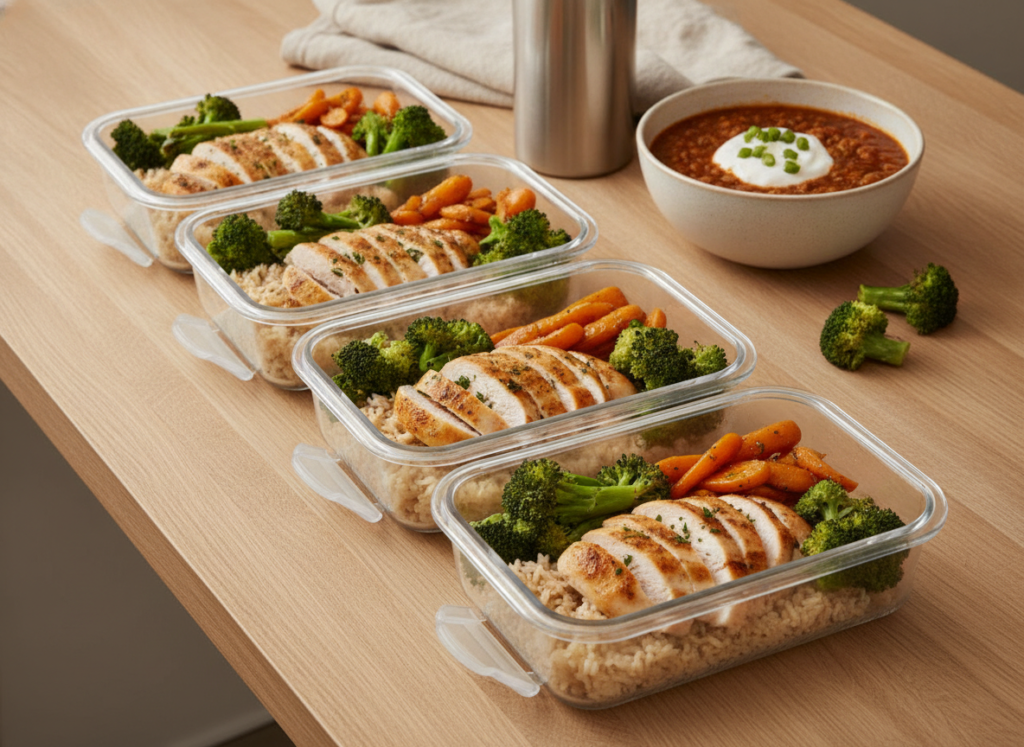
One free block on your day off is enough. Plan about 45 minutes of hands-on time and cook three simple things at once. Three meals cover a run of shifts without burying you in dishes.
- Start a pot of brown rice, which cooks mostly on its own.
- Season 4 chicken breasts and roast them at 400°F until they reach 165°F inside.
- Roast broccoli and carrots on a second sheet pan at the same 400°F.
- Simmer a pot of turkey chili while the oven works.
- Divide everything into 4 containers, each with protein, a slow carb, and a veggie.
Any containers with snap lids work, as long as they fit your lunch bag. A thermos is handy for the chili, since warm food is a comfort at 3 a.m. When I mention containers, lunch bags or thermoses on Ward Wisdom, some links may be affiliate links. That means I may earn a small commission at no extra cost to you.
Book a Check-In If Your Stomach or Energy Stays Off
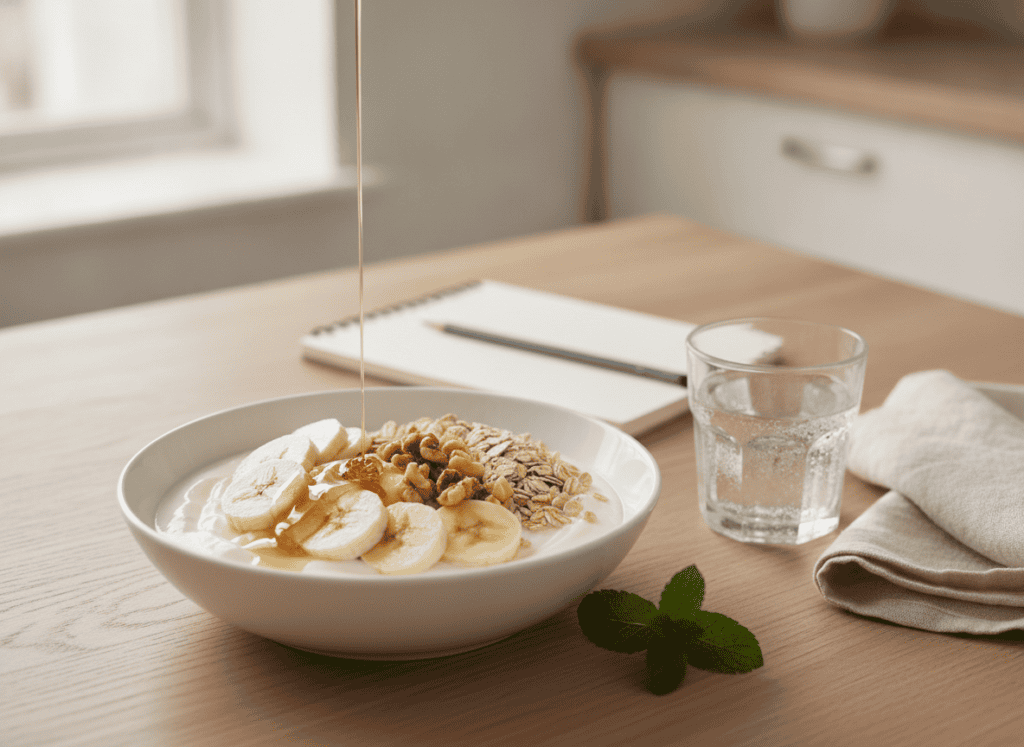
Give this plan about 2 weeks of real shifts. Jot down what you ate and how you felt in your notes app. Night work is hard on the body, and food changes may not fix everything.
If you still have nausea, stomach pain, heartburn most days, or deep tiredness that does not lift, book a visit with your doctor or a registered dietitian. Bring your notes. They give a professional something real to work with, and I would rather you ask than guess.
Get urgent help right away for severe pain, vomiting that will not stop, blood in vomit or stool, or chest pain. Do not wait for a routine appointment.
Avoid These Common Night Shift Eating Mistakes
You now have a night shift eating plan: a schedule, a snack box, a lighter break meal, and a prep routine you can repeat. Start with one change tonight, even if it is only packing a hard-boiled egg and an apple.
If you want to keep building your work routine, my new grad nurse tips are a good next read. Save this pin for later, so it is ready the next time you pack for a night shift.
Free printable · instant PDF
Night Shift Meal Planner: Eat Well, Stay Awake
- ✓ Page 1: My Night Shift Eating Map
- ✓ Page 2: Shift Snack Box and Prep Checklist
- ✓ Page 3: Shift Check-In Tracker
Opens a print-ready page — choose "Save as PDF" to keep it.
Frequently Asked Questions
Q. What should I eat at 3 a.m. on night shift so I don't crash?
Choose a small snack with protein and fiber, like Greek yogurt with berries or an apple with peanut butter. Skip candy and sugary drinks, since they can leave you more tired soon after.
Q. Is it better to eat or not eat during night shift?
Most people feel better with small, light meals than with long gaps or one huge meal. If you feel full, skip the snack and sip water instead. Talk to your doctor if you have diabetes or another health condition.
Q. How often should I eat on a 12-hour night shift?
A common plan is something every 3 to 4 hours. That could be a meal before shift, a snack early on, a small meal on your break, and a light snack near 4 a.m.
Q. Why does my stomach feel sick on night shift?
Eating at odd hours, heavy or greasy food, lots of caffeine, and skipped meals can all upset your stomach. If nausea or pain keeps happening, see your doctor or a registered dietitian.
Q. What can I eat when I get home from night shift so I can sleep?
Keep it light and mild, like oatmeal with banana, an egg on toast, or plain yogurt with fruit. Try to finish eating at least 1 hour before you lie down.
- Eating whatever is nearby when hunger hits
- A foggy, queasy feeling around 3 a.m.
- One huge meal at the wrong time
- Restless sleep after a heavy breakfast
- A written eating schedule every 3 to 4 hours
- A packed snack box ready to grab
- A lighter break meal your stomach can handle
- Three prepped meals waiting in the fridge
- Notes app and your shift schedule
- Protein, slow carbs, fruit and veggies
- Nuts or seeds
- Water bottle (16 ounces or larger)
- Small containers and zip bags
- Insulated bag with ice pack
- Thermos
- Write your shift hours and meal times
- Eat a real meal 1 to 2 hours before shift
- Pack 3 small portions of protein plus fiber
- Eat every 3 to 4 hours, with a half-size break meal
- Swap one trouble food at a time
- Eat a light meal within 1 hour of getting home
- Cook 3 meals in one session
- See a doctor or dietitian if symptoms last past 2 weeks
You Have a Night Shift Eating Plan Now

You now know what to eat on night shift, when to eat it, and how to have it ready before you walk out the door.
Be kind to yourself if the first week is messy. Small changes add up, and one packed snack box already beats the vending machine.
Your next step is a short one. Grab your notes app and write down tomorrow’s meal times before you do anything else.
Save this pin for later, so it is waiting the next time you pack for a long night.

Written by
Hannah Brooks
Founder & Nurse Resource Curator
I started this blog because nurses and nursing students deserve resources that are practical, honest and kind to their time. Too much advice online is vague, recycled or written by people who have never pulled an all-nighter before an exam or limped out of a 12-hour shift. Here you will find study plans, NCLEX prep strategies, brain sheet templates, new grad survival tips, shift meal ideas, gear reviews and real conversations about burnout, money and career change. Every guide is researched carefully, and I tell you when something is my…


