Best Nursing Shoes for Plantar Fasciitis: 12 Picks for Floor Nurses

Your heel feels fine at the start of a shift. Then you sit for two minutes to chart, stand up, and the first step stabs. Finding the best nursing shoes for plantar fasciitis is hard when every box says “comfort.”
I sorted these 12 picks by features, not hype. I looked for a firm heel counter, real arch support, a cushioned midsole, and room for your own insoles. Each pick is a shoe type, so you can match it to your foot.
If you want a quick start, try Rocker-Sole Sneakers With Extra Arch Support for sharp morning pain. Supportive Clogs With Heel Cups suit nurses who want a wipe-clean shoe. Budget Shoes With Firm Heel Counters help when money is tight.
Some links in this post are affiliate links to shoes and insoles. If you buy through them, I may earn a small commission at no extra cost to you. There’s also a free shoe-fit checklist you can grab by email, so you don’t buy the wrong size twice.
1. Rocker-Sole Sneakers With Extra Arch Support

Hold the shoe at eye level and look at the sole from the side. A rocker sole curves up at the toe and heel, so your foot rolls forward instead of bending hard at the ball with each step.
That roll can take some strain off a sore heel and arch. Pair it with a firm arch that fills the gap under your foot, not a flat slab of soft foam. These suit nurses who walk long halls and stand at the bedside for hours.
- The shoe should bend near the toes, not in the middle.
- Press your thumb into the heel. It should give a little, then push back.
- Your arch should feel gently held, never poked.
2. Wide-Toe Box Sneakers for Swollen Feet

By hour nine, your feet are not the size they were at 6 a.m. Many nurses find their feet swell over a long shift, and a narrow shoe turns that into pinching and pressure.
A wide toe box lets your toes spread out the way they want to. The mistake I see most is buying the same size you wear on your days off. If your toes touch the front by lunch, the shoe is too snug for a shift. Look for “wide” or “extra wide” sizing, not only a roomy-looking toe.
3. Thick-Heel Running Shoes for Standing Shifts

Running shoes are built to absorb hit after hit on hard ground, and a hospital floor is hard ground. A thick, cushioned heel can soften each landing when your heel is already angry.
Check your unit’s dress code first. Many mesh running shoes have open tops that do not stop spills, and some workplaces want a solid, closed upper. Also watch the age of the shoe. When the foam feels flat or the tread is worn smooth, the cushion is spent, so check shoe age first if heel pain creeps back.
4. Supportive Clogs With Heel Cups

Clogs are easy to wipe clean, which is why so many nurses love them. The ones worth buying have a deep heel cup that cradles your heel and keeps the padding under it in place.
A slip-resistant sole matters on wet floors. So does a heel strap. Without one, your toes may grip to hold the shoe on, and that tires your feet fast.
- Choose a heel strap or a snug closed back.
- Look for a firm arch, not a flat footbed.
- Pick a slip-resistant outsole for wet floors.
5. Slip-On Shoes With Removable Insoles

If you already own an insole that helps your arch, or a custom one from a podiatrist, this is your pick. A removable insole means you can swap the factory one for yours and keep the shoe.
Slip-ons also save time when you are rushing out the door at 6:15 a.m. Pull the insole out in the store and check that the shoe has a flat, firm base underneath.
6. Lightweight Walking Shoes for Floor Nurses

Every step means lifting your shoe, so weight adds up over a 12-hour shift. A light walking shoe can leave your legs less tired, which helps on units with long hallways and constant trips.
The catch is that light shoes sometimes skimp on support. Squeeze the heel and check the arch before you buy. If you are building your first-day kit, shoes belong near the top of this list of new grad nurse essentials.
7. Budget Shoes With Firm Heel Counters

Squeeze the back of the shoe with one hand. If it folds flat, put it down. That cup around your heel is the heel counter, and it keeps your heel steady with every step.
Many cheaper shoes skip this part, so you have to check it yourself. A firm counter is one of the best things to look for if you want to stay under $100 and still get real support. I tell beginners to test three things before they pay:
- Heel squeeze: the back should resist your hand.
- Bend test: the shoe should flex at the ball of the foot, not the middle.
- Twist test: it should not wring out like a towel.
8. Shoes for Long 12-Hour Shifts on Hard Floors

Tile over concrete is hard on heels by hour nine. Pick a thick, cushioned midsole, a wide toe box and a slightly curved “rocker” sole that helps your foot roll through each step.
Try them on late in the day, when your feet are a little swollen, the way they will be at work. Many nurses keep two pairs and swap them every other shift so the foam can bounce back.
Cushion wears out before the shoe looks old. If the midsole is creased or your heels ache earlier in a shift than they used to, the shoes are done.
9. Orthotic-Compatible Nursing Clogs Under $60
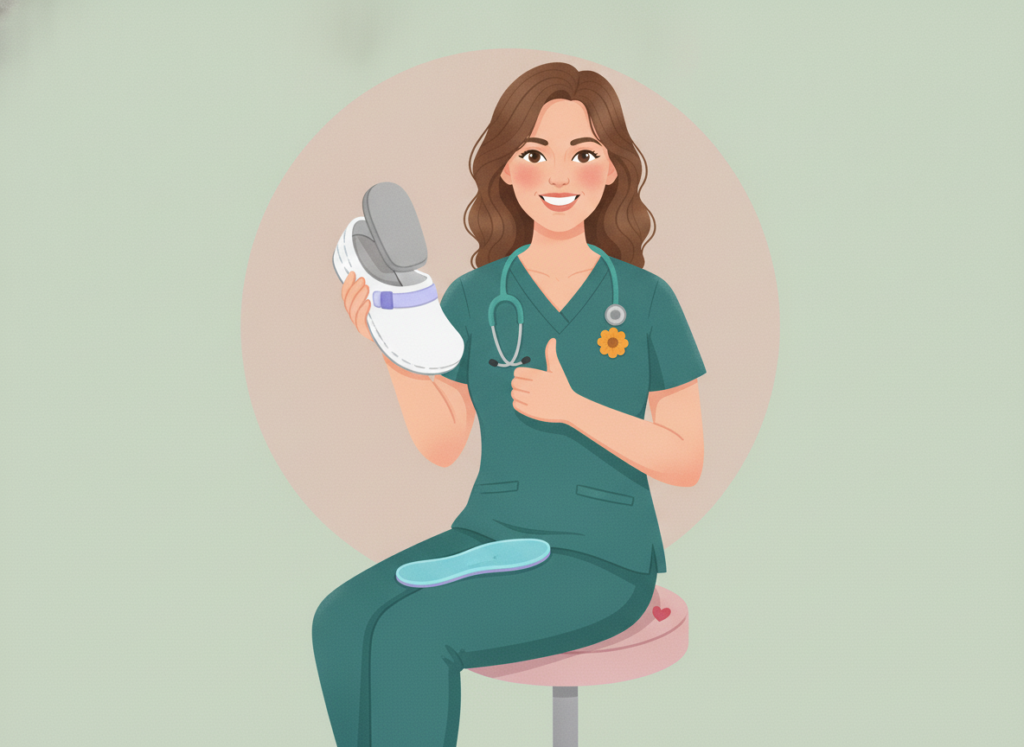
Already have insoles from a podiatrist or the drugstore? Check that the clog’s footbed pulls out before you buy. Then your insole sits where the factory one was, instead of stacked on top and crowding your toes.
Look for a deep heel cup and a back strap that swings up and holds. A clog that slides at the heel makes your foot grip to stay in, which can leave your arches sore.
10. Stability Shoes for Overpronating Feet

Flip your old work shoes over. If the sole is worn down along the inner edge, or your ankles roll inward when you stand, a stability shoe may suit you better than a soft, plush one.
These shoes have a firmer section on the inside of the midsole that limits how far your arch drops. They feel a bit more solid at first. Many running shops will watch you walk and suggest a style, and that is worth 10 minutes of your day off.
11. Leather Work Shoes With Shock-Absorbing Midsoles

Spills happen. Smooth leather wipes clean with a damp cloth, and a closed top keeps fluids and dropped items off your feet. That makes it a smart pick for busy floors and the ED.
Check the midsole, not only the upper. A foam layer such as EVA between your foot and the outsole is what takes the hit from hard floors. Leather is stiffer at first, so plan on a couple of short, easy days of wear before your first long shift. Wipe them down after messy shifts and let them air dry.
12. Easy-Lace Shoes for Quick Shift Changes

Five minutes between the car and handoff is not much time for tying shoes. Elastic no-tie laces, speed laces or a hook-and-loop strap get you into the shoe fast and keep the fit snug.
Whatever style you pick, make sure the shoe locks your heel in place. A loose lace or a floppy strap is also a trip hazard in a busy hallway. These are a good fit for the shoes you keep packed in your nurse work bag for a fast swap after a long day.
Free printable · instant PDF
Nurse Shoe-Fit Checklist: Try-On and Shift Test
- ✓ Shoe-Fit Checklist: In-Store Test
- ✓ Shoe Fit Log: Shift Test
Opens a print-ready page — choose "Save as PDF" to keep it.
Frequently Asked Questions
Can nursing shoes help with plantar fasciitis heel pain?
Shoes with a firm heel counter, real arch support, and a cushioned midsole can ease pain for many floor nurses. They won't cure the condition, though. If heel pain lasts more than a few weeks or keeps getting worse, see a doctor or podiatrist.
What size should I buy if my feet swell during a shift?
Try shoes on in the afternoon, after you've been on your feet for a while, since that's when swelling is worst. Leave about a half inch of room at the toe. Bring the socks you wear at work so the fit is right.
How often should I replace my nursing shoes?
Check your shoes every few months if you work 12-hour shifts. Replace them when the cushioning feels flat or the heel counter folds in too easily. A worn-out shoe can bring back heel pain even if it was a good fit when new.
Are clogs or sneakers better for standing on hard floors all day?
Sneakers with a firm heel counter and a cushioned midsole usually give more support for plantar fasciitis. Clogs with heel cups are easier to wipe clean, so they work well if they also have solid arch support. Try both on before you choose.
Can I wear my own orthotic insoles in nursing shoes?
Yes, but look for shoes with a removable insole. That way your orthotic fits without crowding your toes. Take out the stock insole and set your orthotic in to test the fit before you buy.
Where to Start Your Shoe Search

You do not need all 12. Pick by your situation. Tight budget? Start with the firm-heel budget shoes or the clogs under $60. Feet swell by hour 8? Try a wide toe box first. Heel pain worst on your first steps after sitting? Look at a rocker sole or a snug heel cup.
The best nursing shoes for plantar fasciitis are the ones that fit your foot, not the ones with the most five-star reviews. Try them on late in the day, when your feet are biggest. Some links in this post are affiliate links, so I may earn a small commission at no extra cost to you. My free shoe-fit checklist can go with you to the store.
If the pain does not ease, or it keeps you up at night, see a doctor or podiatrist. Shoes help, but they are not a diagnosis. Packing for a new job too? My new grad nurse essentials list covers the rest of your bag. Save this pin so your feet have a plan for your next shift.

Written by
Hannah Brooks
Founder & Nurse Resource Curator
I started this blog because nurses and nursing students deserve resources that are practical, honest and kind to their time. Too much advice online is vague, recycled or written by people who have never pulled an all-nighter before an exam or limped out of a 12-hour shift. Here you will find study plans, NCLEX prep strategies, brain sheet templates, new grad survival tips, shift meal ideas, gear reviews and real conversations about burnout, money and career change. Every guide is researched carefully, and I tell you when something is my…